
Rules of origin in the EU–Japan EPA, by Yusuke Hatakeyama

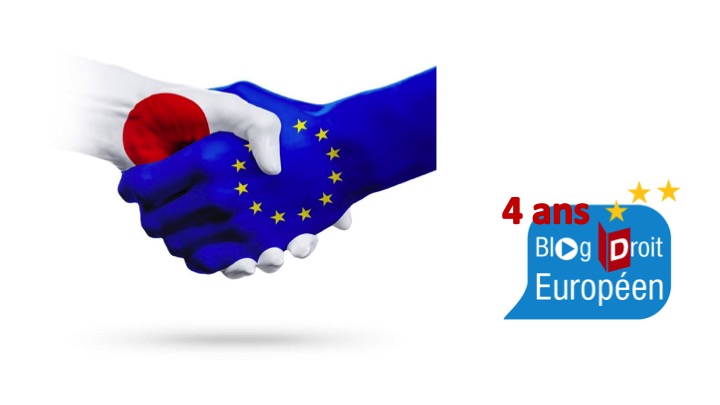
The European Union (EU) and Japan have agreed on progressive rules of origin in the Agreement between the European Union and Japan for an Economic Partnership (‘EU–Japan EPA’1). Rules of origin are one of the most important elements in FTAs, which set out the rules and requirements for application of preferential tariff treatment (reduced or eliminated customs duties) to originating products by the customs authority … Continuer de lire Rules of origin in the EU–Japan EPA, by Yusuke Hatakeyama

Call for expressions of interest for experts in cross-border legal and administrative obstacles, AEBR

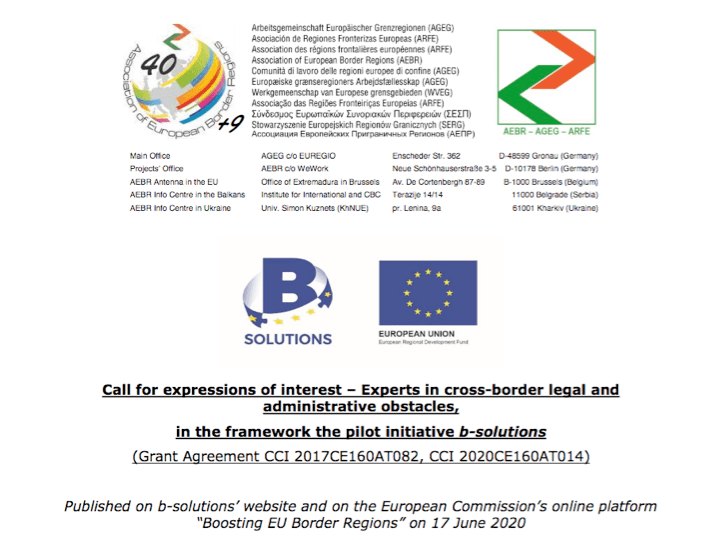
The Association of European Border Regions (AEBR)  – in cooperation with the Border Focal Point at the EU Commission’s DG REGIO –  is launching a “call for expression of interest” for legal experts with knowledge of cross-border matters. The experts awarded will provide advice on border obstacles of a legal and/or administrative nature along EU internal land borders to be selected with the upcoming calls … Continuer de lire Call for expressions of interest for experts in cross-border legal and administrative obstacles, AEBR

Legal Challenges towards a European Open Search Engine, call for paper OSSYM 2020 deadline 6 July

12-14 October the 2nd international Open Search Symposium (OSSYM 2020) will be hosted by CERN in Geneva or via Web. This event aims at analysing the societal, scientific and technical aspects of a European open and distributed internet search. Next to all computing and algorithmic challenges, legal aspects of setting up such an infrastructure in and for Europe will be of major concern Therefore, the … Continuer de lire Legal Challenges towards a European Open Search Engine, call for paper OSSYM 2020 deadline 6 July

Development of the governmental procurement scheme through the japan-eu economic partnership agreement (jeuepa), by Koutaro Matsuzawa

Procurement of products and services by governmental or public organizations has beenone of major topics gathering much attention in multilateral, pluri-lateral or bilateral trade negotiations since, depending on size of relevant state economy and budget of a government, a share of the government procurement market in its economy is said to be generally between 10 percent and 15 percent of GDP1. Some reasons, such as … Continuer de lire Development of the governmental procurement scheme through the japan-eu economic partnership agreement (jeuepa), by Koutaro Matsuzawa

Les juridictions nationales doivent respecter les arrêts de la CJUE, Daniel Kelemen et autres

Voici une traduction française réalisée par Jacques Ziller d’un article collectif publié en anglais sur https://verfassungsblog.de/author/daniel-kelemen/ , dans l’Irish Times, en Espagnol dans El Pais et en Italien dans Il Sole 24 Ore. L’Union européenne est une communauté fondée sur l’État de droit. L’ordre juridique de l’Union est l’épine dorsale de l’UE et l’arrêt Weiss de la Cour constitutionnelle fédérale allemande constitue une grave menace … Continuer de lire Les juridictions nationales doivent respecter les arrêts de la CJUE, Daniel Kelemen et autres

Intellectual Property in the context of the Economic Partnership Agreement between the EU and Japan, Dr. Karl-Friedrich Lenz

The Economic Partnership Agreement between the EU and Japan has many Articles written over hundreds of pages. One of the areas it is concerned with is intellectual property, in Chapter 14 of the EPA, in Articles 14-1 to 14-55, with over 9,500 words not counting relevant Annexes. This article will try to give some information on what has changed in Japanese intellectual property law as … Continuer de lire Intellectual Property in the context of the Economic Partnership Agreement between the EU and Japan, Dr. Karl-Friedrich Lenz

EU-Japan Cooperation in the security field from the perspective of Japan’s Legal Framework, Fumi YOSHIMOTO

The aim of this paper is to examine the current state of the EU-Japan security relationship from the perspective of Japan’s legal framework. While the typical partner both for the EU and Japan is the US and it can be said that “the prospect of a Japan- EU security alliance may seem about meaningful as a relationship between a bald and comb”, as said Midford … Continuer de lire EU-Japan Cooperation in the security field from the perspective of Japan’s Legal Framework, Fumi YOSHIMOTO

Union européenne, Coronavirus et travailleurs de plateformes, Claire Marzo,

Paradoxalement, la crise covid-19 freine la progression des régulations européennes de protection des travailleurs de plateformes alors même que cette même crise démontre à quel point ces travailleurs ont besoin de protection. Il faut revenir sur ces deux points avant de conclure. 1. Les travailleurs de plateformes ont besoin d’une protection accrue en temps de crise A l’heure du coronavirus, les travailleurs de plateformes, comme beaucoup, … Continuer de lire Union européenne, Coronavirus et travailleurs de plateformes, Claire Marzo,

Les chantiers de l’Europe post-Covid19, par Stéphane Rodrigues

9 mai 1950 – 9 mai 2020 : soixante-dix ans après la déclaration Schuman qui l’a portée sur les fonts baptismaux, la construction européenne affronte peut-être sa plus grave crise existentielle. L’esprit de solidarité qui la sous-tend est mis à mal. Ses institutions n’ont pas été tout de suite au rendez-vous des défis de la pandémie. L’Union européenne (UE) tente depuis lors tant bien que mal … Continuer de lire Les chantiers de l’Europe post-Covid19, par Stéphane Rodrigues

Quand la science climatique s’invite au prétoire, Décryptage de l’affaire Urgenda, Nicolas de Sadeleer

Dans un arrêt du 20 décembre 2019, le Hoge Raad des Pays-Bas (ci-après HR) confirme la position de la cour d’appel de La Haye en matière d’efforts à fournir en vue de lutter contre le changement climatique en faisant application directe des articles 2 et 8 de la Convention. Nous mettons ici en exergue l’interprétation innovante du HR pour une matière qui commence à alimenter … Continuer de lire Quand la science climatique s’invite au prétoire, Décryptage de l’affaire Urgenda, Nicolas de Sadeleer