






New EULawSD Webinar: The Precautionary Principle Under EU Law: a Brake or a Lever to Sustainable Development? by Alessandra Donati
We are pleased to announce a third session of the 2020 EULawSD webinar series, which will take place on 13 July 2020 at 2pm CEST. Alessandra Donati, Senior Research Fellow at the Max Planck Institute Luxembourg for Procedural Law, will join us for a dialogue on ‘The Precautionary Principle Under EU Law: a Brake or a Lever to Sustainable Development?’ The webinar will be visible … Continuer de lire New EULawSD Webinar: The Precautionary Principle Under EU Law: a Brake or a Lever to Sustainable Development? by Alessandra Donati

The precautionary approach in the Economic Partnership Agreement between EU and Japan: a threat to the EU precautionary principle? by ALESSANDRA DONATI
The reference to the precautionary approach contained in EPA shall be coordinated with the precautionary principle set forth by article 191 of Treaty on the Functioning of the European Union (“TFUE”) and with the obligation of European institutions to pursue a high level of protection of the environment (Art. 191 TFUE), public health (Art. 168 TFUE) and consumers (Art. 169 TFUE). In this regard, the … Continuer de lire The precautionary approach in the Economic Partnership Agreement between EU and Japan: a threat to the EU precautionary principle? by ALESSANDRA DONATI

Directions in Legal Education 2020″ at Chinese University of Hong Kong – June 18-20
Online Conference: « Directions in Legal Education 2020 » at the Chinese University of Hong Kong – June 18-20 In this 3-day online event, 76 speakers, including distinguished keynote Richard Susskind OBE, will engage in a debate about Teaching Law in Times of Crises, Law&Technology, Diversity, Pedagogy, and other compelling topics in Legal Education. Attendance is free. Find the full program here: https://webapp3.law.cuhk.edu.hk/conf/20200619/programme-rundown/ Register by June 14 … Continuer de lire Directions in Legal Education 2020″ at Chinese University of Hong Kong – June 18-20
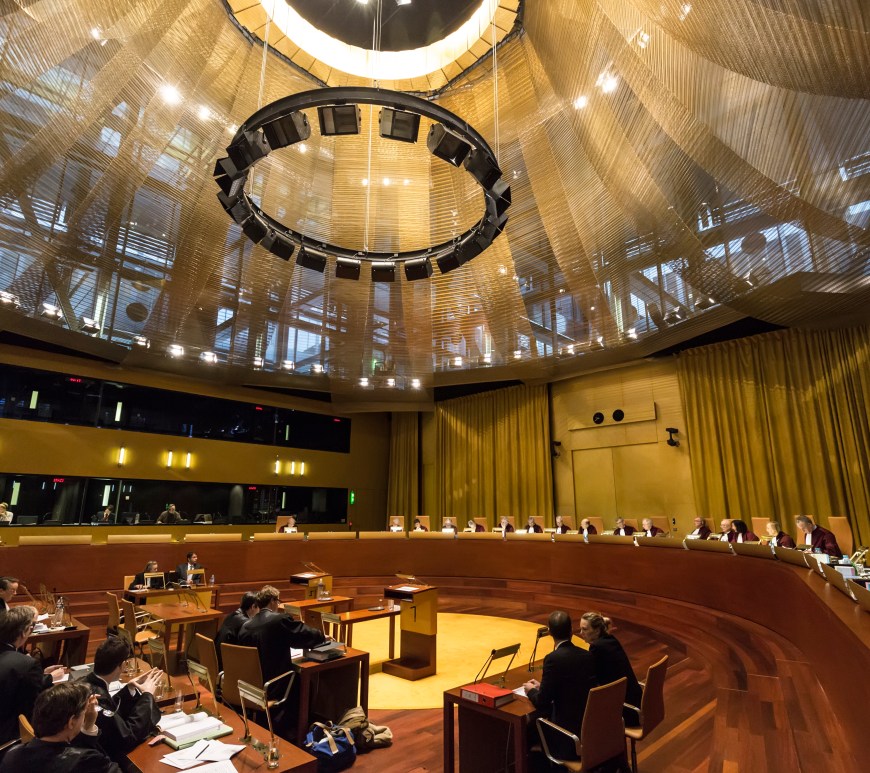
Les juridictions nationales doivent respecter les arrêts de la CJUE, Daniel Kelemen et autres
Voici une traduction française réalisée par Jacques Ziller d’un article collectif publié en anglais sur https://verfassungsblog.de/author/daniel-kelemen/ , dans l’Irish Times, en Espagnol dans El Pais et en Italien dans Il Sole 24 Ore. L’Union européenne est une communauté fondée sur l’État de droit. L’ordre juridique de l’Union est l’épine dorsale de l’UE et l’arrêt Weiss de la Cour constitutionnelle fédérale allemande constitue une grave menace … Continuer de lire Les juridictions nationales doivent respecter les arrêts de la CJUE, Daniel Kelemen et autres

Intellectual Property in the context of the Economic Partnership Agreement between the EU and Japan, Dr. Karl-Friedrich Lenz
The Economic Partnership Agreement between the EU and Japan has many Articles written over hundreds of pages. One of the areas it is concerned with is intellectual property, in Chapter 14 of the EPA, in Articles 14-1 to 14-55, with over 9,500 words not counting relevant Annexes. This article will try to give some information on what has changed in Japanese intellectual property law as … Continuer de lire Intellectual Property in the context of the Economic Partnership Agreement between the EU and Japan, Dr. Karl-Friedrich Lenz

Les illusions du Traité de Lisbonne face à la toute puissance de la finance, par Cécile Barbier
Depuis l’introduction du cadre juridique de l’euro, ci-après la « constitution économique » de la zone euro, l’Union européenne (UE) est confrontée à l’érosion du consensus permissif qui avait prévalu jusqu’alors. Le rejet du Traité de Maastricht par le peuple danois, suivi du petit oui français avait questionné les fondements d’inspiration ordolibérale de la future gardienne de la monnaie unique, la Banque centrale européenne (BCE). La réforme … Continuer de lire Les illusions du Traité de Lisbonne face à la toute puissance de la finance, par Cécile Barbier


Ce que nous dit la crise du Covid-19 sur l’état de l’Union par Emmanuelle Bribosia, Louise Fromont, Cecilia Rizcallah et Isabelle Rorive
« Depuis quelque temps l’Europe semble avoir oublié qu’elle est la fille de l’épopée et de l’utopie. Elle s’assèche de ne pas parvenir à le rappeler à ses citoyens. Trop lointaine, désincarnée, elle ne suscite souvent plus qu’un ennui désabusé » (L. Gaudé, Nous, l’Europe. Banquet des peuples). Fin mars 2020, un peu plus d’un mois après l’émergence de la pandémie liée au Covid-19 en Europe, Jacques … Continuer de lire Ce que nous dit la crise du Covid-19 sur l’état de l’Union par Emmanuelle Bribosia, Louise Fromont, Cecilia Rizcallah et Isabelle Rorive
EU-Japan Cooperation in the security field from the perspective of Japan’s Legal Framework, Fumi YOSHIMOTO
The aim of this paper is to examine the current state of the EU-Japan security relationship from the perspective of Japan’s legal framework. While the typical partner both for the EU and Japan is the US and it can be said that “the prospect of a Japan- EU security alliance may seem about meaningful as a relationship between a bald and comb”, as said Midford … Continuer de lire EU-Japan Cooperation in the security field from the perspective of Japan’s Legal Framework, Fumi YOSHIMOTO
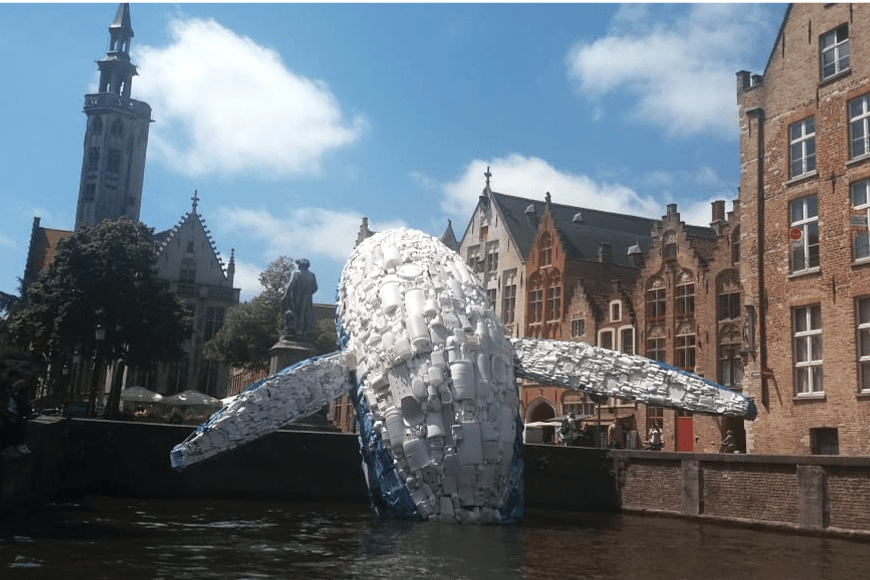
SEVERAL REASONS WHY: Climate change as one of the motives why we are failing in the fight against plastic pollution by Luísa Cortat Simonetti Gonçalves Coutinho
Environmental awareness is still historically new and, consequently, so are the actions to fight the environmental harms caused by humankind. Climate change is already well-known in data and counts with an international legal framework, especially since 1992, with the establishment of the UNFCCC. The plastic pollution is newer, still lacks data and international legal solutions. But the two biggest environmental problems caused by humankind have … Continuer de lire SEVERAL REASONS WHY: Climate change as one of the motives why we are failing in the fight against plastic pollution by Luísa Cortat Simonetti Gonçalves Coutinho
L’agenciarisation de l’ELSJ comme réponse face aux crises, par Carole Billet
La création d’agences au sein de l’espace de liberté, de sécurité et de justice (« ELSJ ») est un mouvement progressif, qui était déjà largement amorcé lors de l’adoption du Traité de Lisbonne. Plusieurs agences étaient en effet déjà en place dans les différents domaines de l’ELSJ : l’Office européen de police (« Europol ») créé en 1995, dans le but de faciliter l’échange de renseignements entre polices nationales dans … Continuer de lire L’agenciarisation de l’ELSJ comme réponse face aux crises, par Carole Billet
 blogdroiteuropéen